Log File Analysis: The SEO Signal Most Consultants Ignore
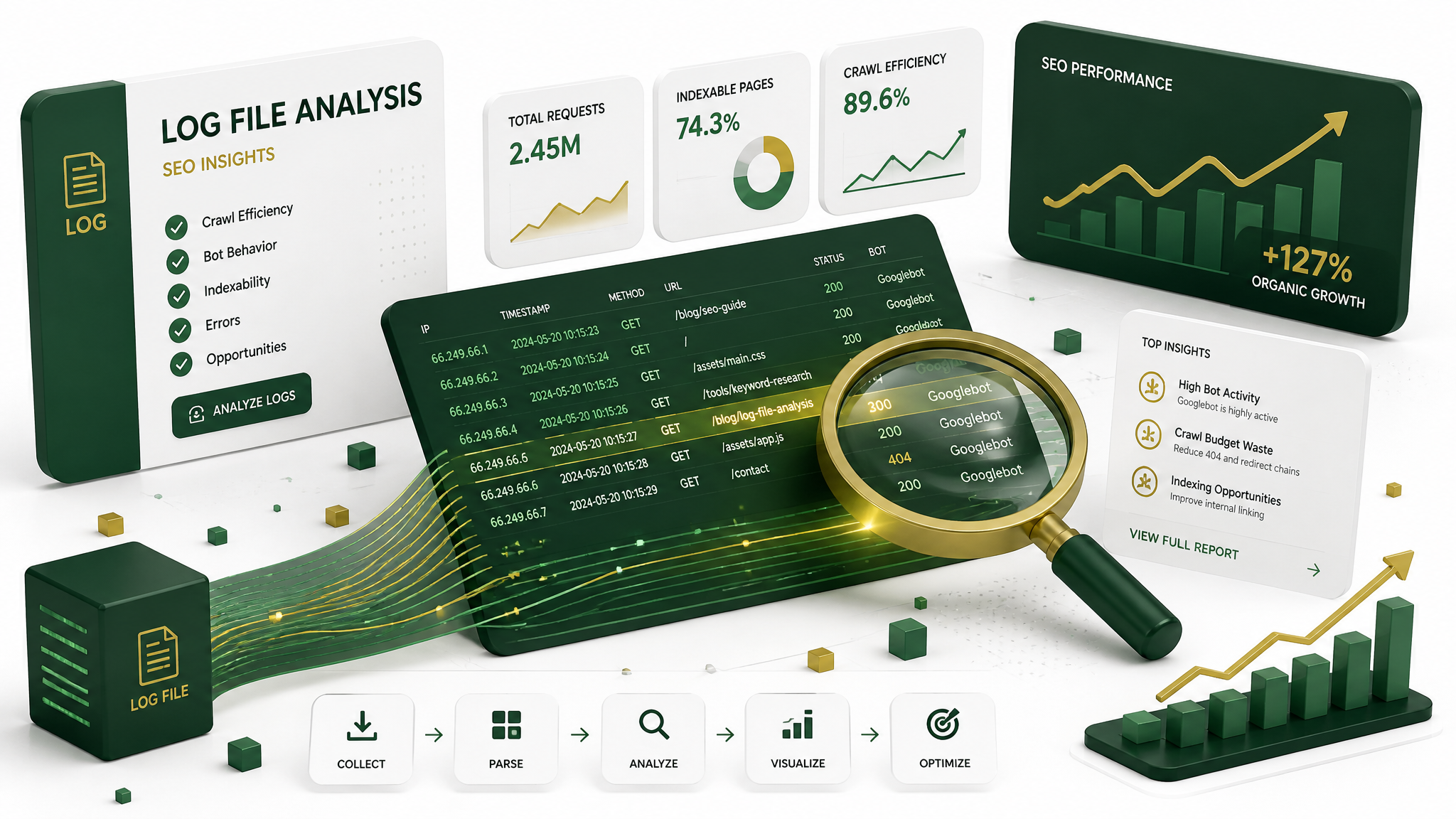
Most SEO reporting tools show you an estimate of how search engines interact with your website. Server log files show you the truth. Every time Googlebot, Bingbot, or any crawler requests a page, your server records it — the URL, the status code, the timestamp, and the user agent. That record is the single most accurate source of crawl behaviour you will ever get, and yet the vast majority of consultants never open it.
We have been analysing log files since long before it was fashionable. Back in the mid-2000s we were writing about visitor pathways and crawl efficiency when the rest of the industry was still obsessing over meta keywords. The fundamentals have not changed — if search engines cannot crawl your important pages efficiently, they will not rank them well.
What log files actually tell you
A raw access log looks intimidating, but it answers questions no other data source can:
- Which pages search engines crawl most — and which they ignore entirely.
- How much of your crawl budget is wasted on parameters, redirects, and dead ends.
- Whether new content is being discovered quickly or sitting undiscovered for weeks.
- The exact status codes bots receive — revealing soft 404s, redirect chains, and server errors invisible in a browser.
- How crawl frequency correlates with the pages that actually drive organic revenue.
Turning crawl data into ranking gains
The goal is not to admire the data — it is to redirect crawl budget toward the pages that matter. When we find search engines spending 40% of their crawl on faceted-navigation URLs that should never be indexed, we fix it. When high-value product or service pages are crawled only once a month, we restructure internal linking and sitemaps to pull them into the crawl priority.
If you are not looking at your log files, you are optimising for a version of your website that only exists in a tool’s imagination.
A practical starting point
Start by exporting at least 30 days of raw server logs. Filter to verified search engine bots, then segment requests by status code and by directory. You will almost always find two things: important pages being under-crawled, and worthless URLs eating your budget. Fix both, and rankings on your priority pages tend to follow within a crawl cycle or two.
Log file analysis is not glamorous, but it is one of the highest-leverage activities in technical SEO. Google's own documentation on managing crawl budget for large sites confirms the principle: waste less crawl on low-value URLs and more of your important pages get seen.
Crawl efficiency is one piece of a much larger picture. If you are still deciding how technical SEO fits alongside your website, paid campaigns, and local visibility, start with our complete guide to choosing digital marketing near me.
Want results like these for your site?
Let's talk about how three decades of SEO expertise can grow your organic traffic.
Get a Free Consultation